How to Prepare Smart for Competitive Exams in 2026: A Complete Daily Study Plan
Learn how to prepare effectively for CUET, SSC CGL, IBPS PO, and RRB NTPC with mock tests, daily quizzes, current affairs, and AI-powered performance analysis. Follow this complete study strategy to improve your score consistently.

Introduction
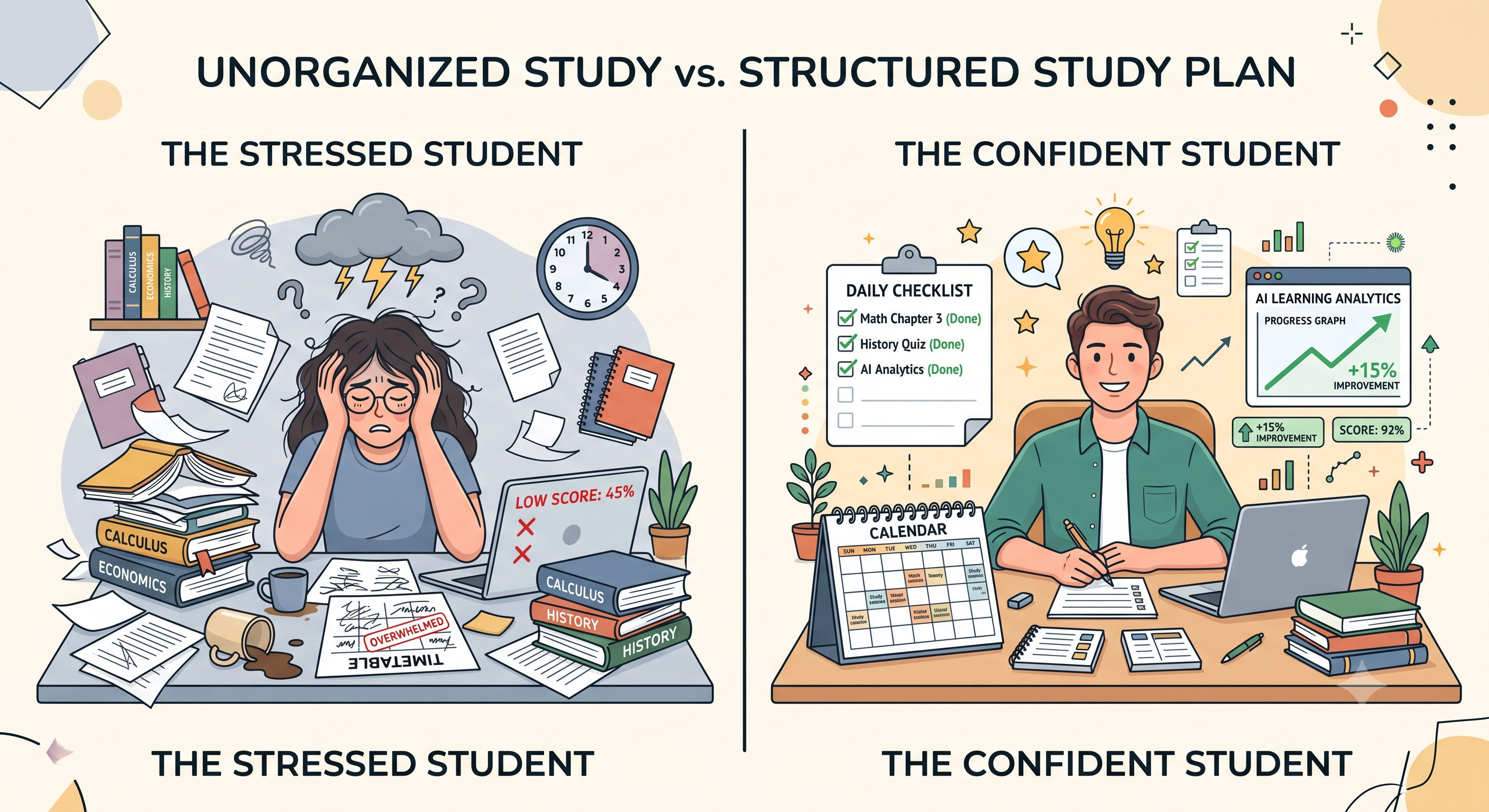
Competitive exams are becoming tougher every year. Thousands of students put in long hours of hard work, but still don't get the results they deserve — simply because they don't have a structured study plan.
The truth is, success is no longer about studying more. The real difference comes from studying smarter.
A smart preparation strategy combines concept learning, practice questions, revision, current affairs, and regular performance analysis. Students who consistently analyze their mistakes improve much faster than those who simply complete books.
In this guide, we'll explain step-by-step how you can prepare efficiently for competitive exams using daily quizzes, mock tests, current affairs, and AI-powered performance tracking.

Why Most Students Don't Improve
Many aspirants repeat the same routine every day.
They study new chapters.
They solve random questions.
They memorize facts.
But they rarely analyze where they're losing marks.
Without identifying weak topics, preparation becomes guesswork instead of progress.
Common mistakes include:
- No revision schedule
- Ignoring current affairs
- Not attempting mock tests
- Not analyzing mistakes
- Studying without time management
Step 1: Build Strong Concepts
Before attempting full-length mock tests, make sure your basics are clear.
Focus on understanding concepts instead of memorizing formulas.
Allocate your study time like this:
- 40% Concept Learning
- 30% Practice Questions
- 20% Revision
- 10% Mock Tests
Strong fundamentals automatically improve accuracy.
Step 2: Practice Daily Quizzes
Daily quizzes are one of the easiest ways to revise regularly.
Instead of reading the same notes repeatedly, solve short quizzes every day.
Benefits include:
- Better retention
- Faster recall
- Improved confidence
- Regular revision
- Better accuracy
Even spending 15–20 minutes daily can create a significant difference over several months.

Step 3: Read Current Affairs Every Day
Current affairs play a major role in almost every competitive examination.
Rather than reading random news, focus on exam-oriented topics like:
- Government Schemes
- International Relations
- Economy
- Awards
- Sports
- Science & Technology
- Environment
- Important Days
Daily reading followed by quizzes helps retain information much longer.
Step 4: Attempt Weekly Mock Tests
Mock tests simulate the real examination environment.
Attempt at least one full mock every week.
During the test:
- Follow the actual exam timing.
- Avoid distractions.
- Attempt questions strategically.
- Manage time wisely.
After completing the test, spend more time analyzing than solving.
Improvement happens where analysis happens.
Step 5: Use AI Performance Analysis
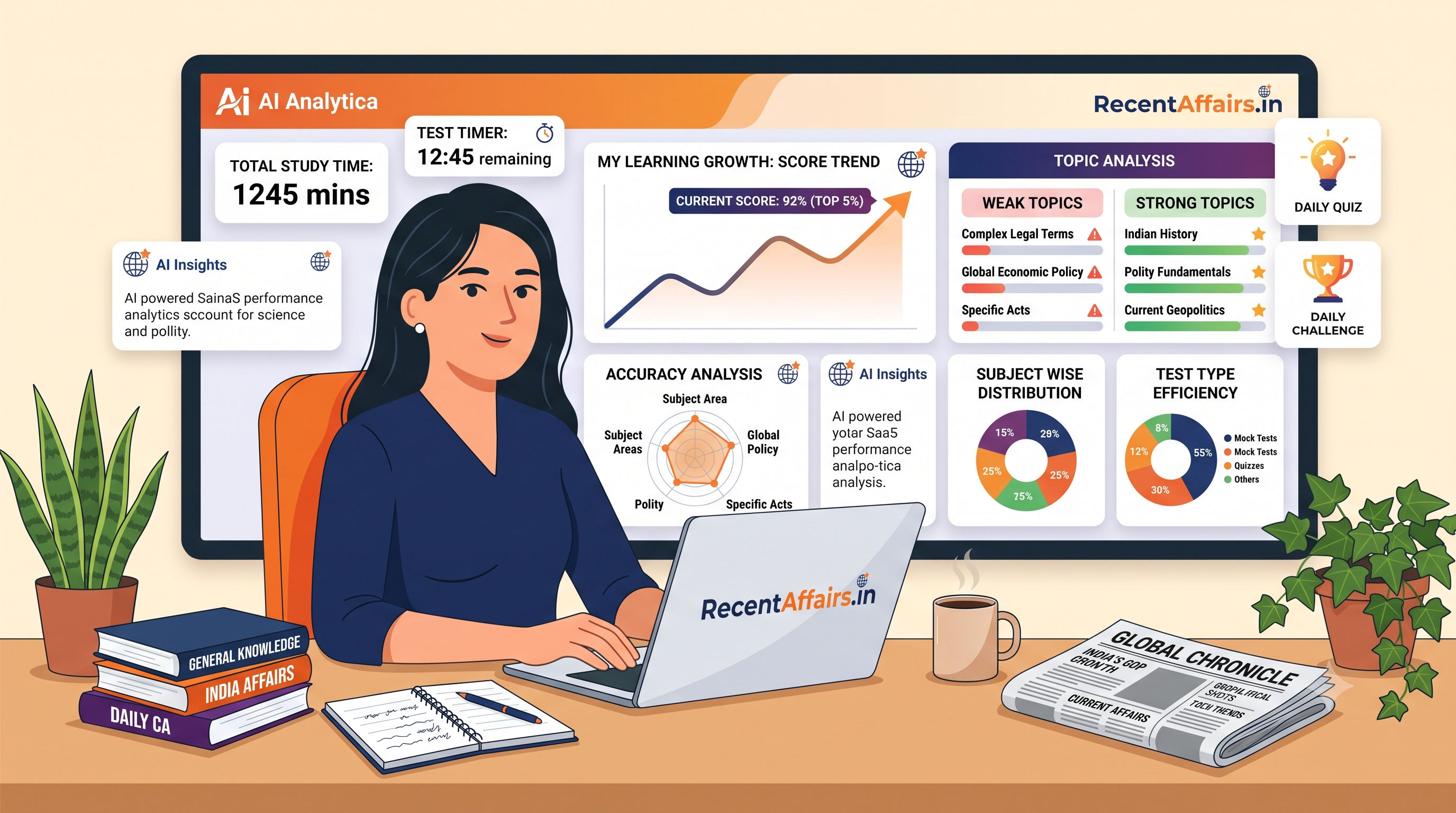
One of the biggest advantages of modern learning platforms is AI-powered performance tracking.
Instead of simply showing your score, AI analysis helps you understand:
- Strong topics
- Weak subjects
- Time spent per section
- Accuracy percentage
- Frequently repeated mistakes
- Personalized improvement suggestions
This makes your preparation data-driven rather than assumption-based.
Daily Study Schedule
A simple schedule can help maintain consistency.
| Time | Activity |
|---|---|
| Morning | Concept Learning |
| Afternoon | Practice Questions |
| Evening | Current Affairs |
| Night | Daily Quiz + Revision |
| Weekly | Full Mock Test |
Consistency matters more than studying for extremely long hours.
Common Mistakes to Avoid
Avoid these mistakes during preparation:
- Skipping revision
- Ignoring previous year papers
- Giving too many mock tests without analysis
- Studying only favorite subjects
- Reading current affairs without revision
- Comparing your progress with others
Focus on improving your own performance every week.
Final Tips
Preparation is a marathon, not a sprint.
Small daily improvements lead to significant long-term results.
Use mock tests to evaluate yourself.
Use daily quizzes to revise.
Stay updated with current affairs.
Analyze your mistakes after every test.
Most importantly, remain consistent even when progress seems slow.
Conclusion
Cracking competitive exams is not about studying harder than everyone else.
It is about studying systematically, revising regularly, and learning from every mistake.
By combining concept learning, daily quizzes, mock tests, current affairs, and AI-powered performance analysis, you can steadily improve your accuracy, confidence, and overall exam performance.
Remember, preparation should always feel like progress — not guesswork.

Written by
RecentAffairs Editorial Team